

Learning Under the Best Conditions
LE TATOUAGE
Charline LOISIL
7/14/20252 min read
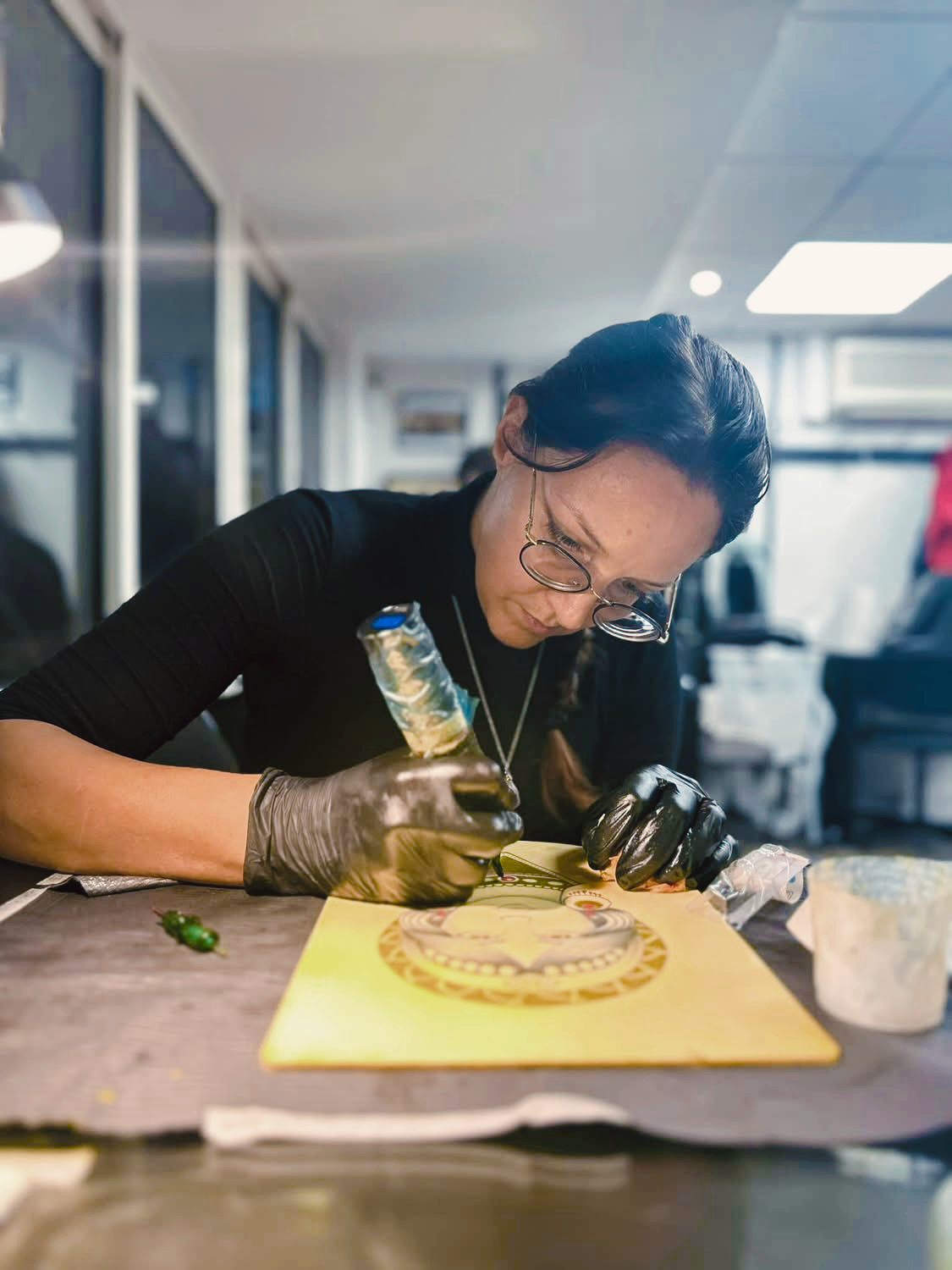
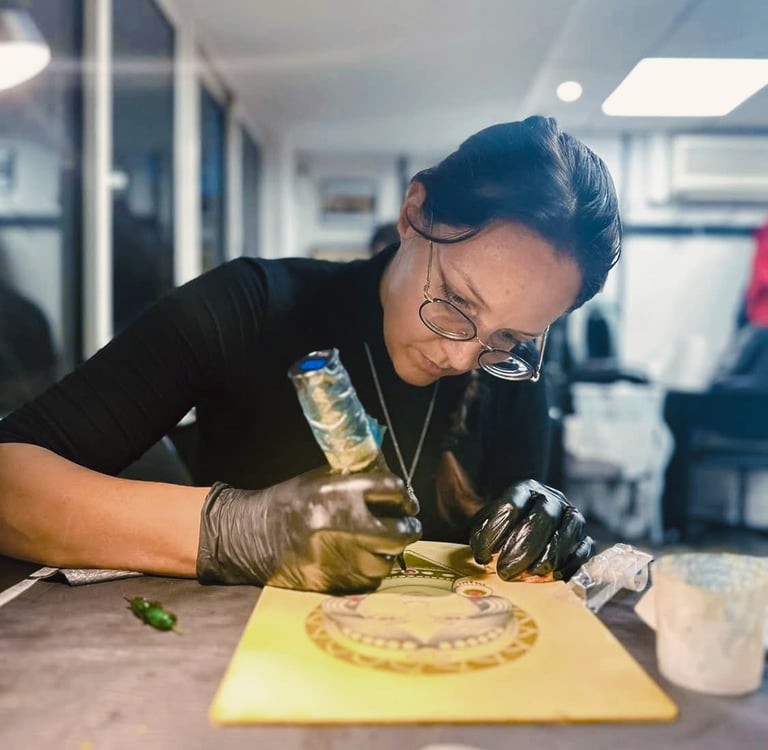
🌿 Learning under the best conditions
When starting out in tattooing, it can be tempting to go it alone as a self-taught artist, but this carries many risks. To learn properly and progress without putting anyone in danger, it is crucial to follow a supervised training course or find professionals who can guide you towards your goal. I personally had the opportunity to train with CASTLE TATTOO ACADEMY in Montpellier. Afterwards, I found great support at KāV Tattoo, with Blue Bee Ink as my mentor, who agreed to support me in my learning. This experience was pivotal in my development.
The training allowed me to:
Understand and apply the hygiene rules essential for professional practice,
Learn the correct techniques that ensure clean, precise work while respecting the skin,
Ask all my questions throughout the modules in a supportive and safe environment,
Discover tips, methods, and tools that still help me work efficiently and professionally today
My time at KāV Tattoo allowed me to develop in an environment that met hygiene and safety standards, while guiding me through the process of creating my first tattoos on skin. I learned to manage various aspects of the profession: welcoming and supporting clients, organising the workspace, and understanding team dynamics within a professional shop. This experience gave me a solid foundation to work under the best conditions and with a genuine work ethic
The Right Tools for Learning Without Causing Damage
Tattooing isn’t just about holding a machine. It’s about mastering a set of tools and skills. Here are some essential elements to start properly, without risking irreversible mistakes:
High-quality synthetic or practice skins: To practise lines, shading, and filling without tattooing a real person too early.
Sterile, professional equipment: Single-use needles, gloves, protective gear, etc.
Adjustable machines for beginners: Allowing you to test different settings while maintaining control.
Sketchbook and graphic tablet: To practise designing motifs, refine line work, and develop your style.
Specific cleaning products: To meet hygiene standards from your very first practices.
Joining a Community to Avoid Learning Alone
Learning doesn’t stop at training. Sharing with other beginners or professionals is extremely valuable. Joining a group like “Entraide Tatoueur Pro & Débutant (France)” allows you to:
Share your first experiences,
Ask technical questions,
Receive constructive feedback,
Find support and motivation during moments of doubt.
⚠️ Responsibility: Don’t Rush the Process
It’s important to remember that people who get tattooed by beginners may not always realise the risks involved. Incorrect settings, excessive depth, poor hygiene: the consequences can be serious, lifelong, or even dangerous to health.
It is the beginner tattooist’s responsibility to:
Refuse to tattoo without sufficient preparation,
Clearly explain the limits of their skill level,
Never neglect hygiene or sanitary protocols,
Always continue learning, questioning themselves, and practising on synthetic skin before moving on to real skin.
In Conclusion
Learning tattooing requires time, discipline, patience, and a lot of humility. Training under the right conditions, as I did with Castle Tattoo Academy and later in a professional shop, gives you the best chance to progress confidently while respecting the trust clients place in you.
Do things properly, surround yourself with the right tools and people, and never forget that every tattoo is a commitment—both to your reputation, your ethics, and someone’s skin for life.
Entering the world of tattooing is an exciting adventure, but also a great responsibility. Behind every line drawn, there is a technical skill, adherence to strict hygiene rules, and above all, a commitment to the person who will wear the tattoo for life. Learning to tattoo cannot be improvised, and it is essential to equip yourself with the right tools, best practices, and reliable guidance.